On Saturday, April 18, 2026, we’re excited to host the 2026 Society Ball at Detroit’s landmark Guardian Building. Ticket holders will enjoy a VIP cocktail hour followed by a seated dinner and entertainment on the 32nd floor (sold out!). At 8 p.m., The Speakeasy afterparty will kick off on the retail promenade with live music, dancing, open bar, late night bites, and more. Speakeasy tickets are still available here!
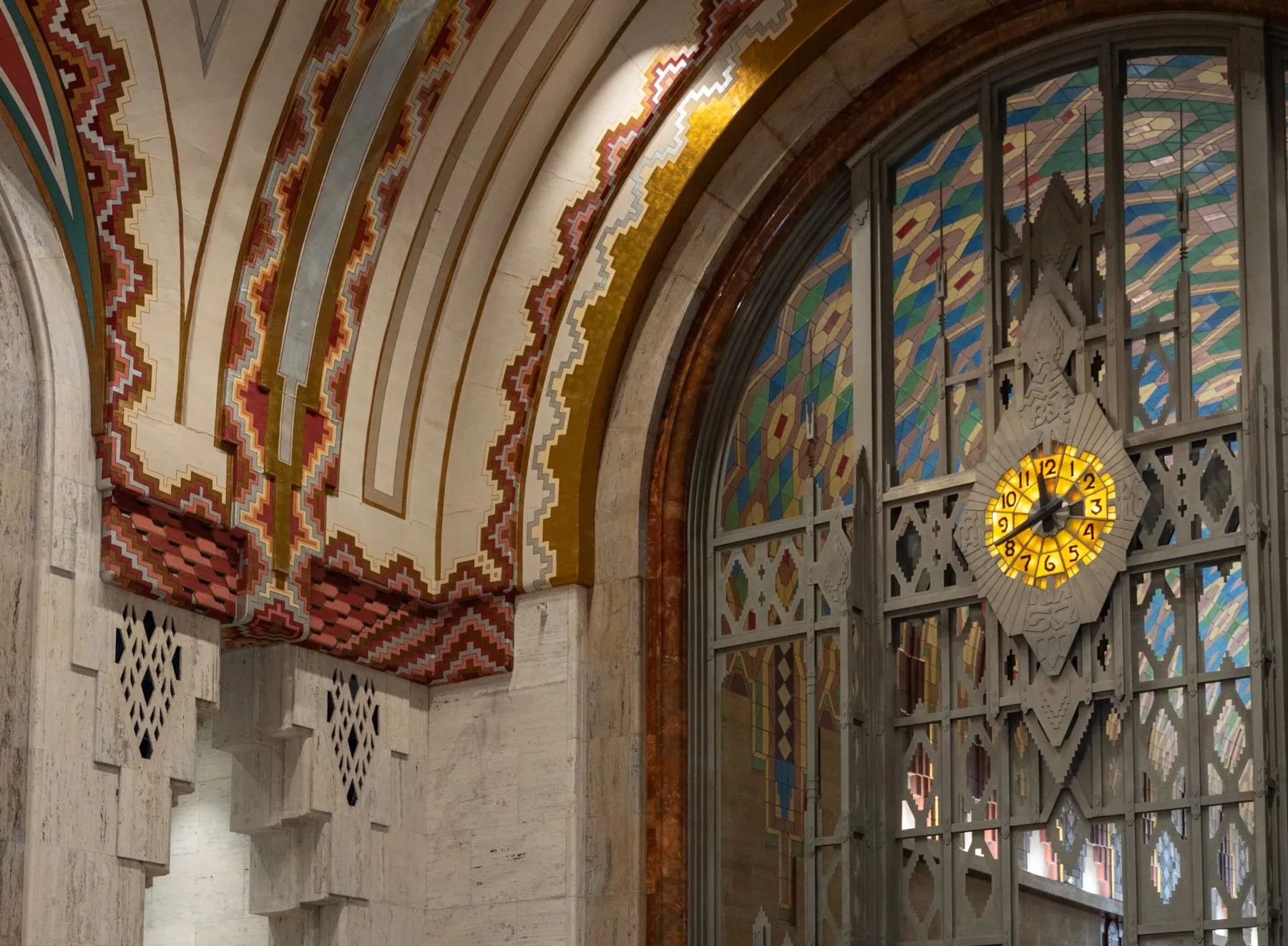
The Guardian Building's Monel Metal and Tiffany Glass clock as seen from the retail promenade.
The event will take guests into several spaces of the iconic building that have served different functions over the years. The Guardian Building – then known as the Union Trust Building – opened in April 1929, as the headquarters for the Union Trust Company, a progressive banking firm that enjoyed rapid growth around the turn of the 20th century. While it would collapse in the Great Depression, Union Trust had outgrown two previous office locations by 1927, and its future looked bright when work began on its new building. The firm selected noted architect Wirt C. Rowland of Smith, Hinchman and Grylls to construct a daring new headquarters that would reflect the bank’s vibrant, elegant, and successful image.
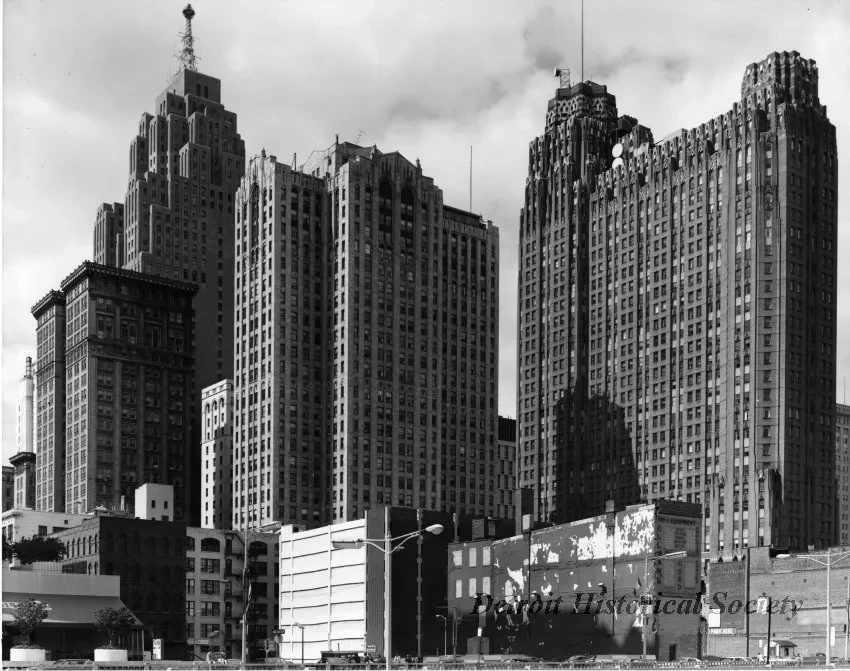
1974 view of the Penobscot Building, Buhl Building, and Guardian Building from the W. Jefferson Service Road by William Rauhauser. Detroit Historical Society collection.
Rowland was already known for his innovative Art Deco designs – including the nearby Penobscot and Buhl buildings – but took an unusually hands-on approach to all levels of design for the Union Trust Building. For the layout, Rowland drew inspiration from Gothic cathedrals and included two soaring towers reaching 486 feet in height. He chose warm orange brick for the exterior, an unusual color for office buildings at the time, and further ornamented it with Atlantic Terra Cotta and Pewabic Pottery in bold geometric motifs. These original designs were repeated throughout the building.
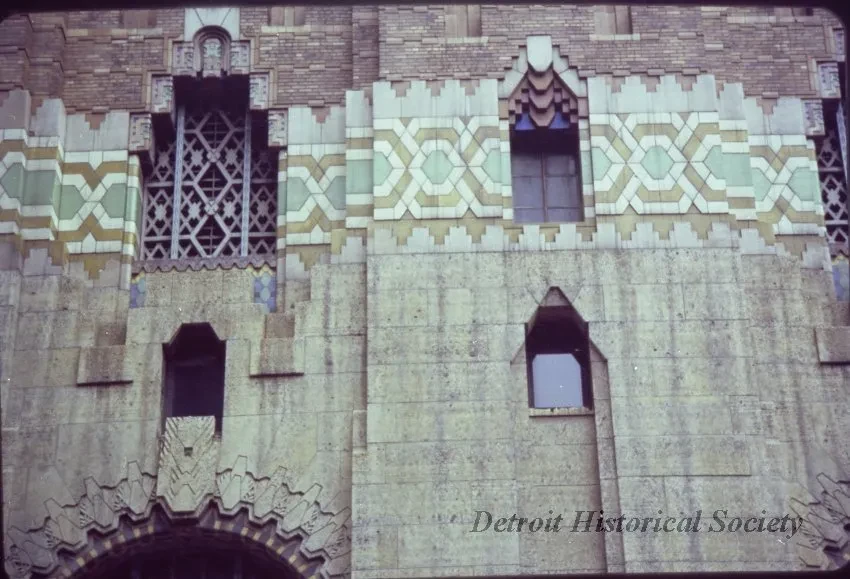
c. 1970 view of green and ivory-colored band of decorative Pewabic tile around the exterior of the Guardian Building. Detroit Historical Society collection.
For the interior, Rowland selected distinctive finishes like Rookwood tiles, seen on the famous lobby ceiling (below); Monel Metal for grates, gates, and the building’s Tiffany glass clock, which rose over the banking floor; and natural materials like marble, travertine, walnut, and teak to adorn the walls of both public and private spaces. He designed the building’s furniture and even the dishes that were used in its dining rooms.
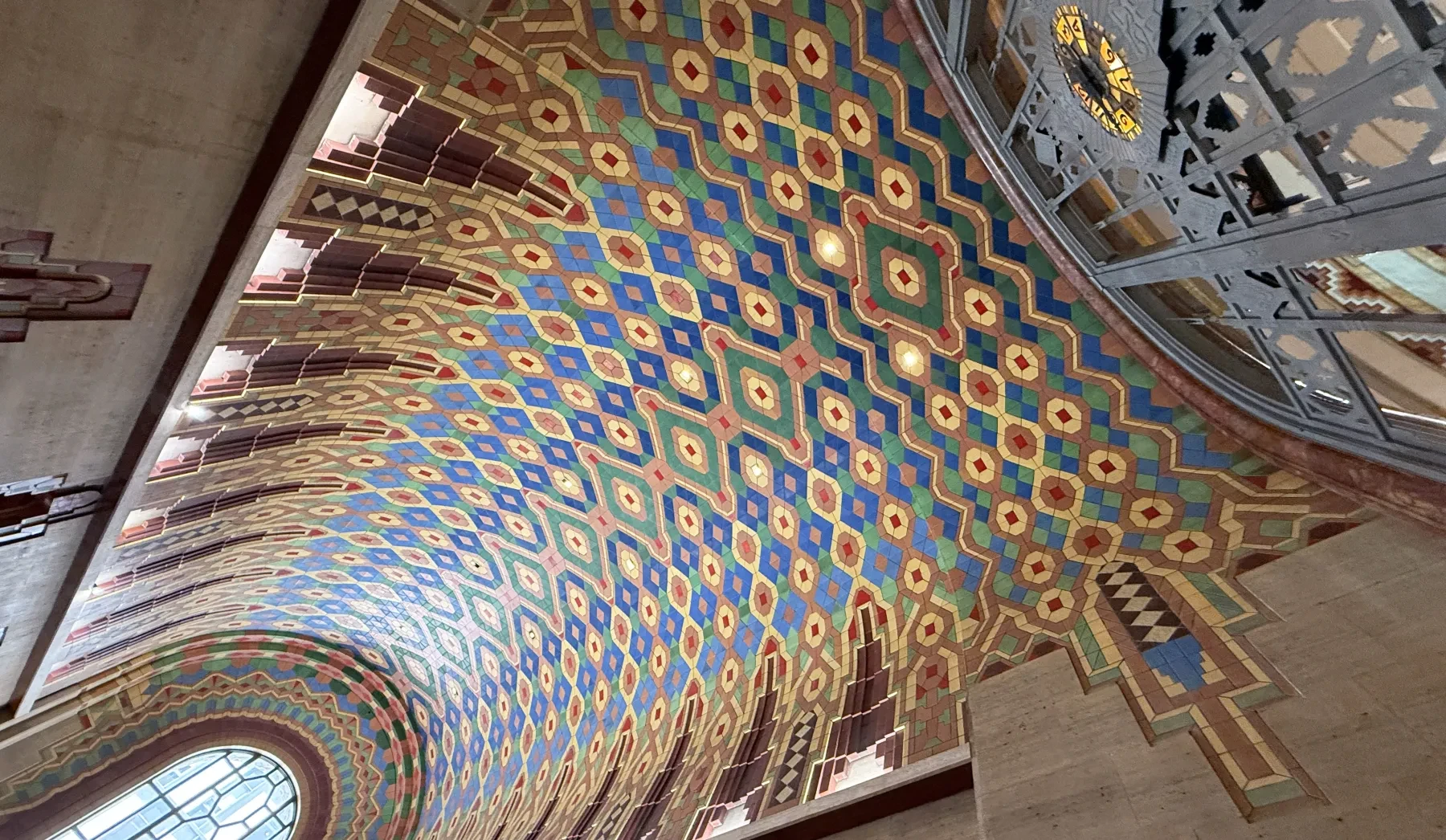
The lobby ceiling decorated with a colorful array of Rookwood tiles.
Then and Now
Over the years, many of these original finishes were lost or altered, despite extensive restoration of the building in the 1980s and early 2000s. The 32nd floor Guardian Club, where Society Ball guests will enjoy dinner, was originally the building’s public cafeteria. The floor also housed executive dining rooms, with a kitchen between the two spaces. See how the public dining room originally looked in the photograph below, from the Detroit Public Library’s Burton Collection.
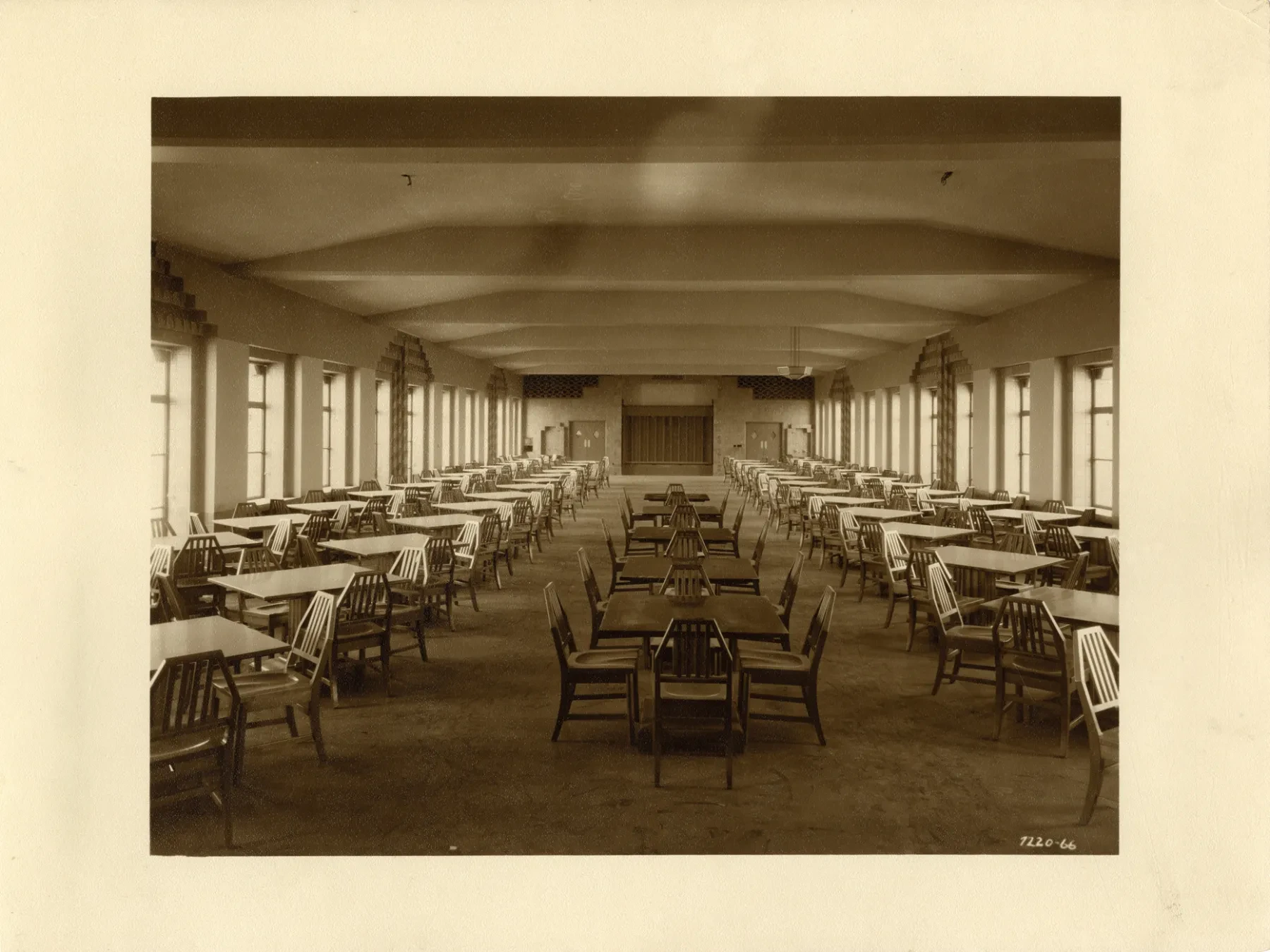
c. 1930 view of the dining room on the 32nd floor of the Union Guardian Building by Grossman Knowling Lear. Detroit Public Library collection.
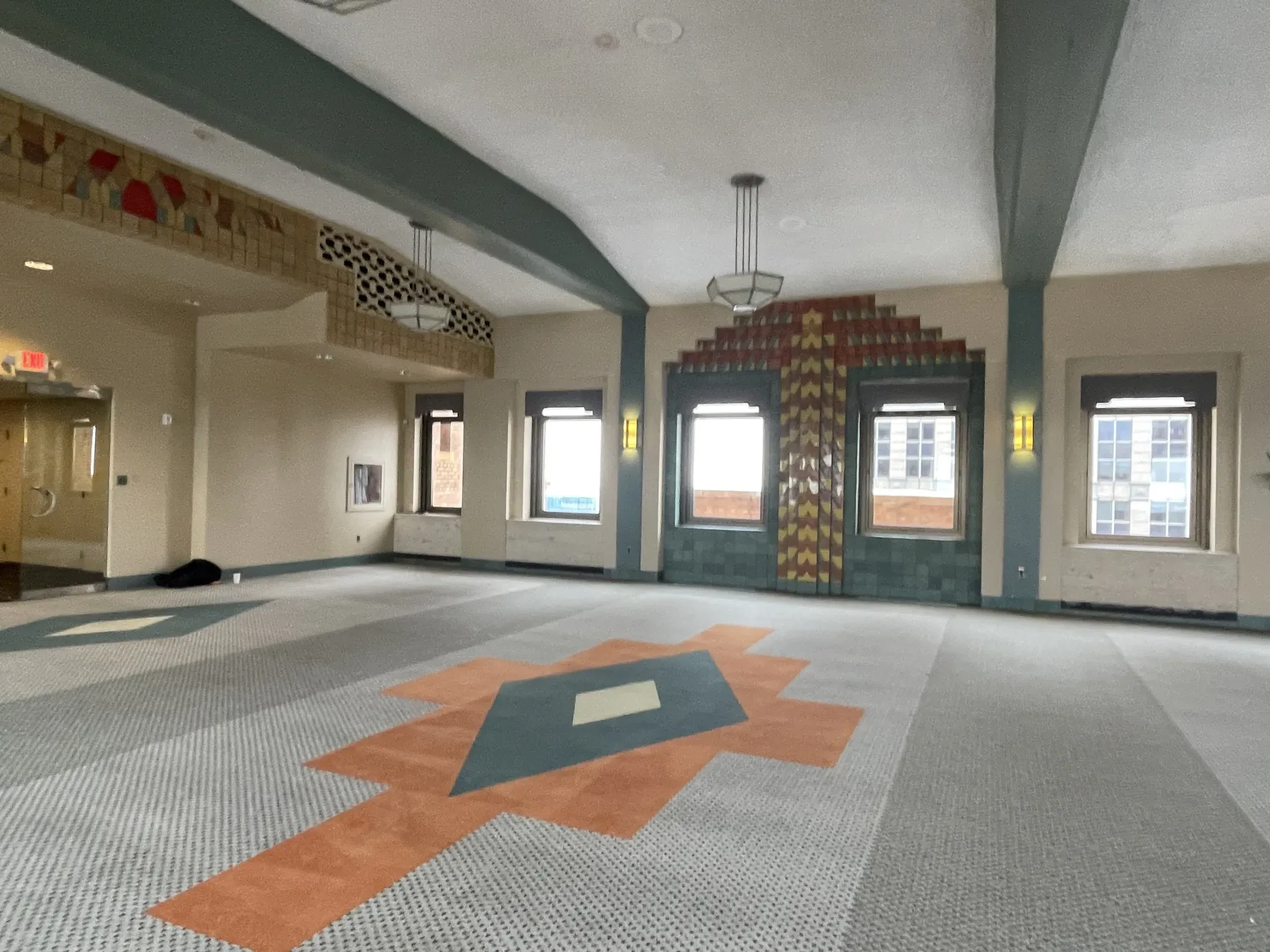
2026 view, showing the 32nd floor Guardian Club. Flint Faience tiles surrounding the windows are original to the room.
The retail promenade, where The Speakeasy will be held, was originally the main Union Trust banking floor. Teller booths ran the length of the room, and Rowland-designed tables anchored the center. In 2003, the Sterling Group bought the building and created the retail promenade to open this breathtaking space back up to the public. Today, it serves as a gathering place for events and a daily stop for shoppers and office workers. It's also where you'll find our Wayne County History Project exhibitions on display throughout 2026!
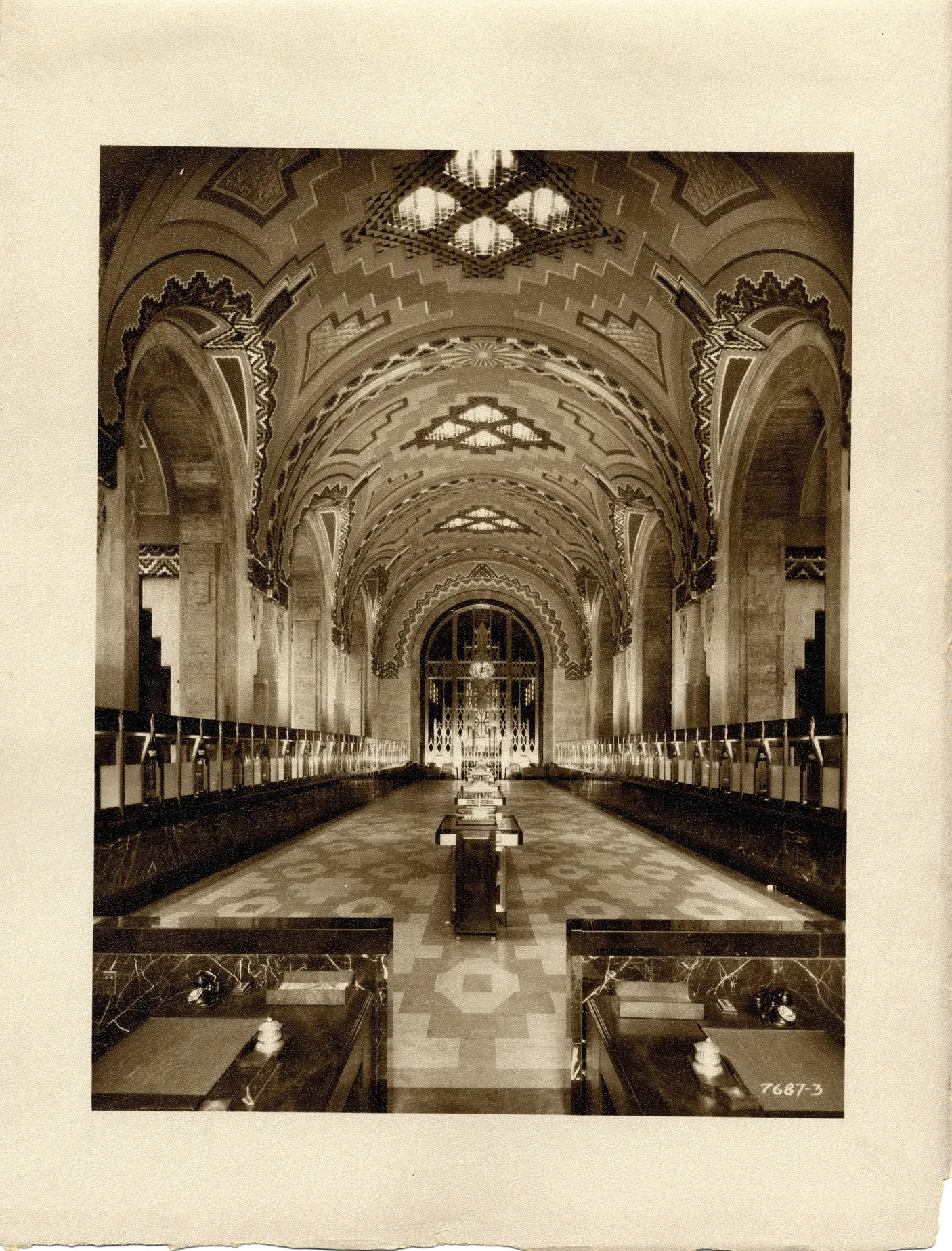
c. 1930 view of the main banking floor in the Union Guardian Building by Grossman Knowling Lear. Detroit Public Library collection.
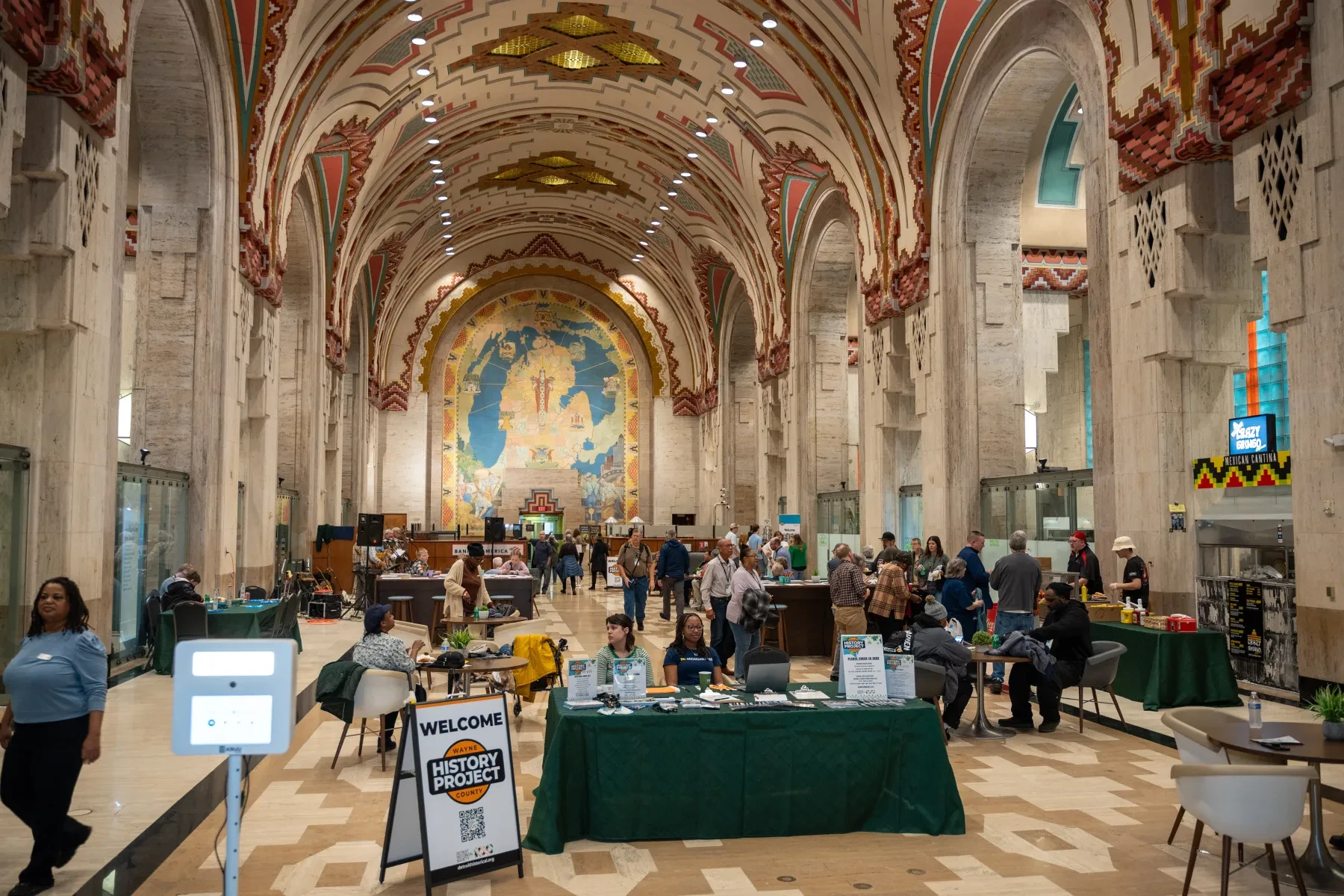
2026 view of the retail promenade during the Wayne County History Project exhibition #4 open house.
See more photos from the Guardian Building’s early years in an incredible gallery by commercial photographers Grossman Knowling Lehr, housed in the Burton Collection of the Detroit Public Library, and learn more about the building’s history in our online encyclopedia. Then get ready to explore this living piece of Detroit history on April 18 - get your Speakeasy tickets here!
Sources:
Grossman Knowling Lear, Detroit Public Library, Burton Historical Collection.
Guardian Building, Encyclopedia of Detroit.
The Guardian Building: Cathedral of Finance by James W. Tottis. Wayne State University Press, 2008.