c. 1935 Bakelite telephone. Detroit Historical Society collection.
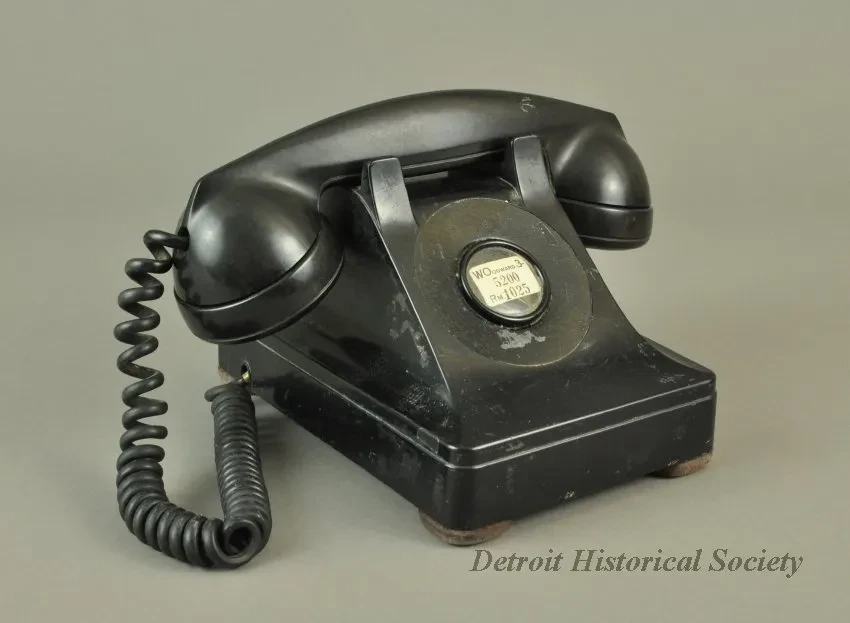
The modern American phone number consists of ten digits. The first three are the area code, which identifies a geographical area. The next three are the prefix, which refers to the switch at the phone carrier’s central office (more on that below). The final four digits are the line number. While no longer tied to physical phone lines, today’s phone numbers have a history rooted in place.
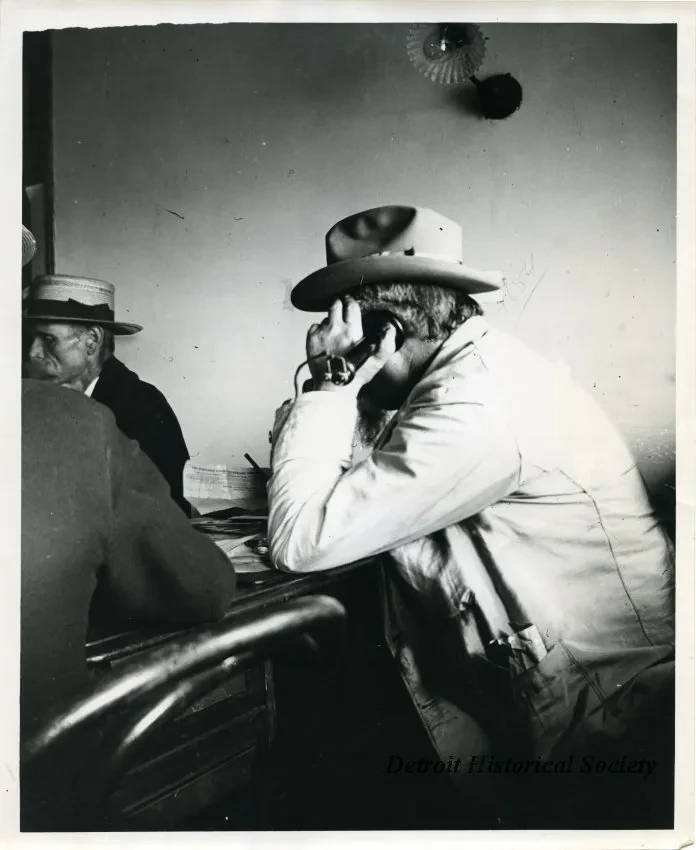
Michigan Governor Hazen S. Pingree pictured on the phone while sitting at his desk on September 3, 1898. Detroit Historical Society collection.
By 1900 there were over 600,000 telephones in service in the United States, and by 1910 that number had skyrocketed to over 5.8 million. In the days before automated switching, telephone calls were manually routed through physical locations and placed by talking to an operator. The first telephone numbers, introduced in 1878, were a combination of the name of the local central office (or telephone exchange) and two or three digits. For example, DEarborn-513.
In 1920, telephone numbers were expanded to four digits, still using the exchange name as part of the number. They were assigned to residents by location. 1930 saw the standardization of phone numbers in a system known as the 2L-5N, or “two letter and 5 number” system. The two letters signified the closest telephone exchange, and the five numbers were the assigned phone number. Detroit exchange names included CApitol, LAkewood, TIffany, and VErmont.
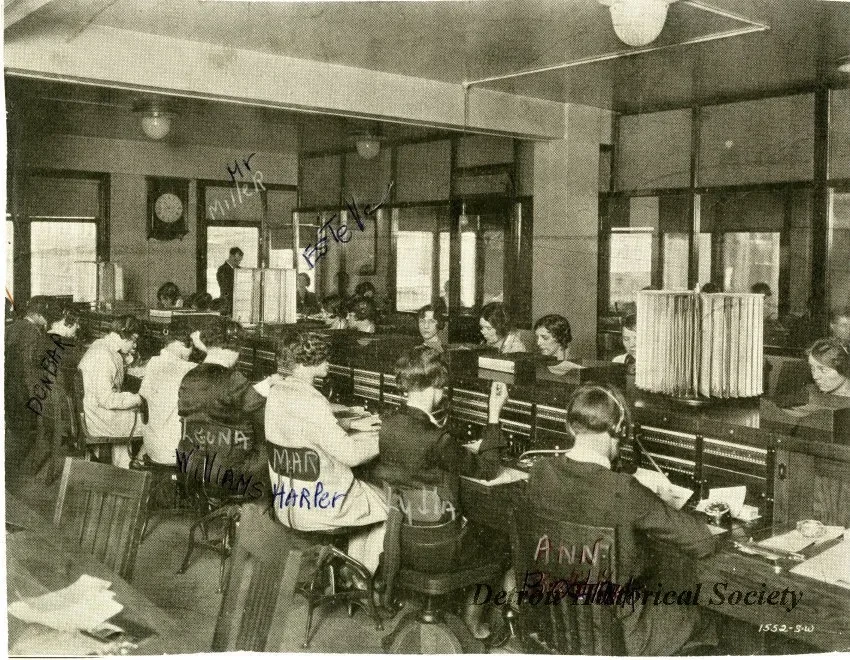
1927 photograph depicting the interior of the offices of the Merchants Credit Bureau, located within the Merchants Building on the east corner of Grand River and Broadway Avenues. The company's switchboard operators sit on both sides of a long bank of switchboards while other employees work at idesks in the background. Detroit Historical Society collection.
As telephone usage continued to grow, these systems experienced limitations, included establishing usable exchange names that were easy to distinguish and spell. This led to the introduction of all-number dialing in the 1960s.
By the way, you can thank Detroit for your private phone number. Though the ability to have a private number existed in the late 1800s, they weren’t as popular as party lines. Detroit helped change that. In 1879, it supposedly became the first city to assign individual phone numbers, making the party line outdated.
The Advent of the Area Code
Even with dial phone sets, long-distance calls were manually forwarded between centers by long-distance operators. This required long call set-up times with the involvement of several intermediate operators. When placing a call, the originating party would typically have to hang up and be called back by an operator once the line was established.
After World War II, there was a major push to continuously improve the experience of placing long-distance calls. There were many goals: systemizing local numbering plans; speeding up the time it took to place long-distance calls; reducing costs to customers; and eventually preparing the system to allow customers to direct-dial long-distance calls. In addition to significant engineering advances, further identifiers for phone numbers were required to give each phone line a unique number.
In the mid-1940s, AT&T created a new nationwide numbering plan in coordination with the independent telephone operators. The plan divided most of North America into eighty-six numbering plan areas (NPAs). Each NPA was assigned a unique three-digit code, typically called NPA code or simply area code. 313 is one of the original 86 area codes published in 1947. Areas with the largest populations received the easiest to dial codes (remember, these were the days of rotary dial phones!).
Originally serving all of southeast Michigan including Detroit, the 313 area code has already been split twice, once in 1993 to create the 810 area code for the Brighton, Flint, and Port Huron areas, and again in 1997 to create the 734 area code for the western Wayne County suburbs and Washtenaw and Monroe counties. 313 numbers are projected to be exhausted in the coming years, and a new area code for new numbers will be put into effect.
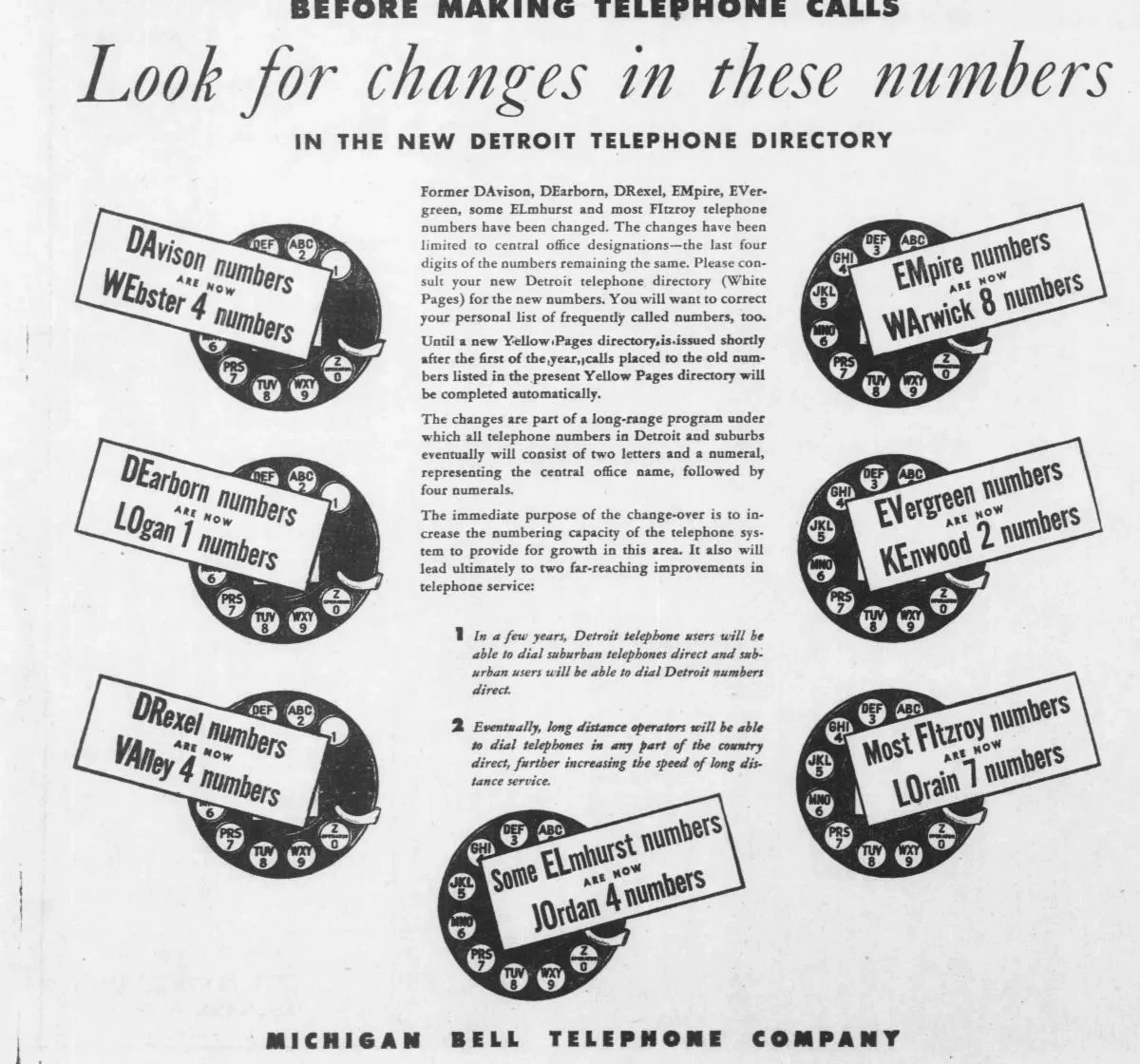
Part of a series of ads placed in Detroit newspapers by Michigan Bell Telephone explaining upcoming changes in telephone numbers. Detroit Free Press November 15, 1947.