Elmwood Cemetery is the final resting place for senators, governors, generals, and scads of other prominent Detroit citizens. Visitors can’t help but notice the dozens of obelisks that serve as tombstones, but the careful observer might notice one obelisk unlike the rest – a marker intentionally broken in half. This marker belongs to Senator Jacob M. Howard and it serves as an allegory for his unfinished life’s work.
abolitionist leader
While largely forgotten today, Howard was a titan of social justice in his time. Howard arrived in Detroit in 1832 at 27 years old and quickly got to work. After being admitted to the Bar in 1833, Howard was named City Attorney in 1834 and was elected to the Michigan Legislature in 1838. By the time he turned 36, Howard was a member of the U.S. House of Representatives and “was known to shelter freedom seekers” at his home, which was located at Larned and Hastings.
In 1854, Howard was one of the driving forces behind the “Under the Oaks” convention in Jackson, Michigan that brought together hundreds of abolitionists and gave birth to the Republican Party. Beyond helping to organize the event, Howard galvanized the growing movement by drafting key resolutions in the new party’s platform.
Two examples:
“Resolved, that the institution of slavery, except for the punishment of a crime, is a great moral, social and political evil.”
“Resolved, that slavery is a violation of the rights of man as man; […]; that God and nature have secured to each individual the inalienable right of equality […] “
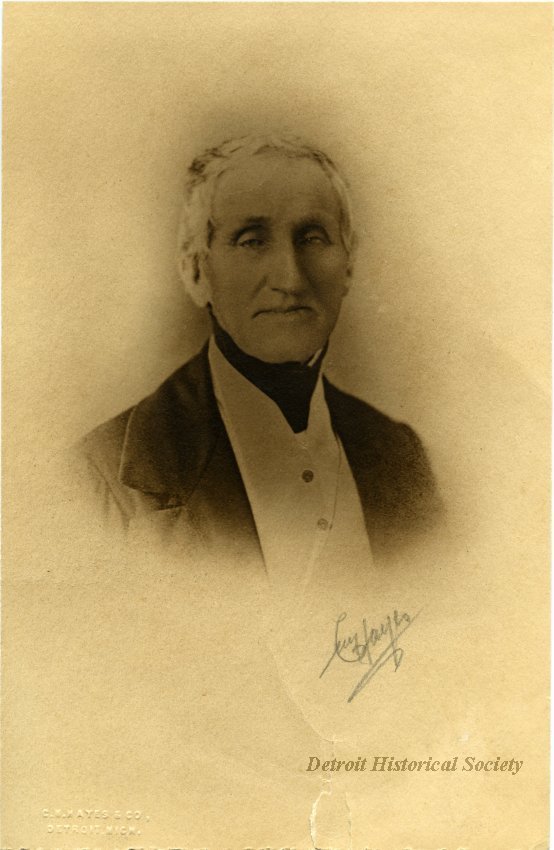
Cabinet card bearing a sepia-toned bust portrait photograph of Jacob Merritt Howard, c. 1868. Detroit Historical Society collection.
Howard was elected Michigan Attorney General in 1854, and in 1862 was appointed to the U.S. Senate. Once sworn in, Howard worked with President Lincoln to draft and pass the 13th Amendment to the U.S. Constitution that formally abolished slavery in 1865 — using language adapted from his “Under the Oaks” resolutions.
He also drafted language in the 14th and 15th Amendments. The latter guaranteed African American men the right to vote, while the former ensured citizenship for formerly enslaved people. Howard died a month after he left office in 1871.
A Fitting Resting Place
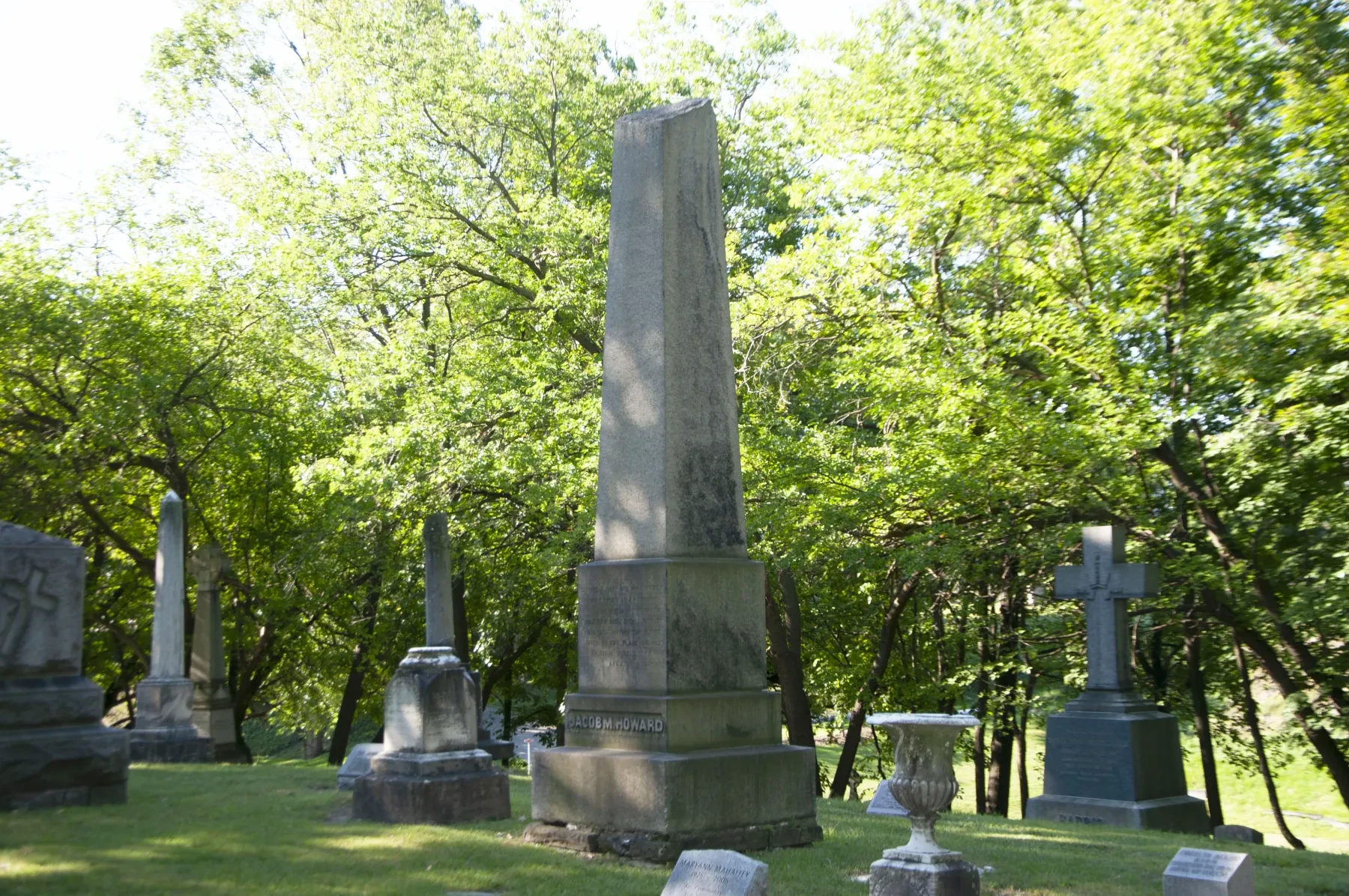
Jacob M. Howard monument at Elmwood Cemetery, 2022.
The Senator requested that his grave be marked by an obelisk but stipulated that if racial equality had not been achieved by the time of his death, the top should be broken off as a symbol his incomplete work. As of 2026, the obelisk remains broken.
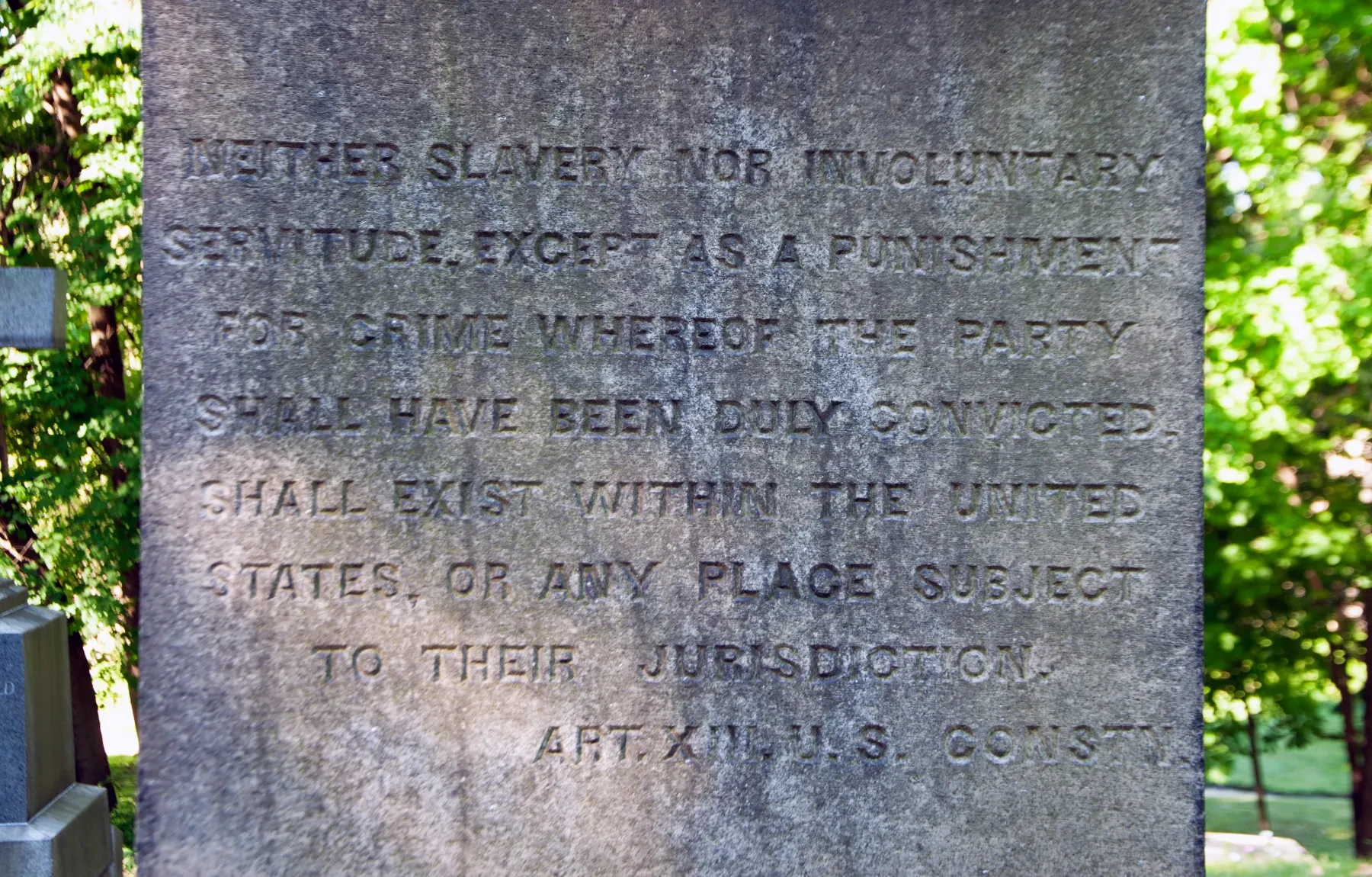
Detail of the Howard monument, which bears an inscription of text from 13th Amendment to the U.S. Constitution.